


(co-authored by John Coleman)
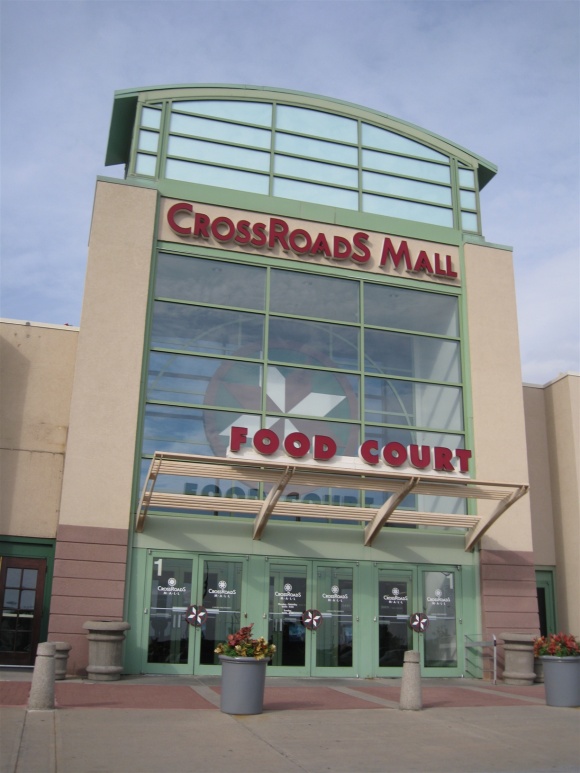
A typical suburban enclosed mall (Crossroads Mall; Omaha, Nebraska; Labelscar, the Retail History Blog)
The enclosed suburban shopping mall came to symbolize the height of middle class American culture from the 1960’s through the 1980’s. The ubiquitous shopping mall was a retail model that wooed stores away from downtowns and main street shopping areas. The enclosed mall became the location for retail, socializing, cinema and the ever present food courts where teens and their families often spent the afternoon far from their community and the comfy confines of their kitchens and dining room tables.
At one time you could find an enclosed shopping mall in most population centers in just about any suburban location in the country. Much like main street shopping areas defined earlier eras of the culture, the enclosed shopping mall became an iconic symbol of suburban America in the mid to late 20th Century.
Fading Glory
 These “palaces” of American culture – where the Orange Julius and Sam Goody once ruled – were on the decline in many parts of Maryland by the 1990’s. Cynical real estate professionals often stated that existing malls needed more “pad sites.” This was the “too much parking” response as if putting in more isolated retail outlets and landscaped islands was going to be the salvation to the demise of a local mall. Others reasoned that “big box retail” would be the deliverance for declining malls, as if instead of “pad sites,” malls would surrounded by superstores and this would be the sure fire cure for what was ailing them.
Ultimately, the winds of retail change swept away the commercial viability of many, if not most, enclosed shopping malls. Today, one can review lists of dead malls and learn their stories on a website dedicated to past malls. If one cares to look, 12 malls are listed under Maryland on this site. While not intended to address the vagaries of the retail sector, another icon of the 1960’s, Bob Dylan, encapsulated this concept of change:
“The order is rapidly fadin’
And the first one now will later be last
For the times they are a-changin’”[0]
Can We Fix It?

Landover Mall, Landover Maryland (credit: djcn0te on flickriver)
Planning literature on the topic of dead malls often leads to proposed solutions. One of these is another auto-oriented retail concept, the “lifestyle center.” Lifestyle centers are sometimes described as “strip shopping centers turned outside in.” Customers drive to a lifestyle center, park and then walk to the center. Once there, one walks along sidewalks with storefronts facing each other across a low-volume, two-lane street. Typically, large parking areas surround this “upscale” main-street-like retail model. Not unlike the mall, one is expected to drive a motor vehicle to this retail center where one experiences the feel of a traditional main street while walking from store to store along landscaped pedestrian areas. An added feature of lifestyle centers is the ever present outdoor seating at adjacent bistros and restaurants. Nothing like soaking up the pedestrian flavor with drinks and sandwiches in hand before heading out on Highway 61 with your upscale purchases tucked nicely on the backseat of your classic Mustang convertible.
As an alternative to malls, lifestyle centers may run their course long before the last mall closes its doors. They appear to be more of a transition to, but not necessarily a destination on the path to sustainable 21st Century retail models.
“Louie the King said let me think for a minute son
And he said yes I think it can be easily done
Just take everything down to Highway 61.” [1]
Talkin’ ‘Bout My Generation
If you don’t take anything else way from this, remember that the key to sustainable retail over the next couple of decades will be designing places that appeal to the tastes and aspirations of the Millennial generation.

Generation Y isn’t interested in driving miles away from cities and towns in order to find affordable housing
That’s right; the Millennial generation (Gen Y) represents the future of Maryland’s economy. Attracting and keeping this group will swing the retail pendulum once more and it probably won’t be to the types of retail centers that we have been used to the past 50 or more years.
Consider this: The Millennial generation, also known as Generation Y or the “Echo Boomers,” is three times bigger than Generation X and even bigger than the Baby Boom generation. Currently, there are about 80 million Millennials and 76 million boomers in America. Half of all Millennials are already in the workforce and approximately 10,000 Millennials turn 21 every day in America. By the year 2025, three out of every four workers globally will be from this group. From 2001 to 2009, the average annual number of vehicle-miles traveled by people ages 16-34 dropped 23 percent, from 10,300 to 7,900, a survey found. Gen Y/Millennials, tend to ride bicycles, take public transit and rely on virtual media. [2]
The Millennials aren’t hopping in the Mustang and heading to the mall. So, what does this mean for the future of our communities and to the planning profession?
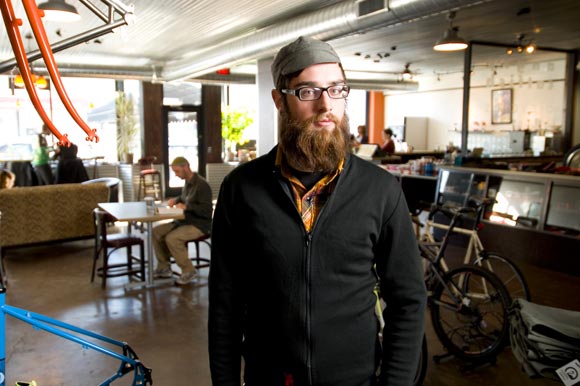
Gen Y – the “Echo Boomers”
Baby Boomers and Gen X did the “drive-til-you-qualify” routine, (e.g. traveling further and further from urban centers), to find new housing within their price range. Because of current market conditions, or possibly other influences, Gen Y isn’t interested in driving miles away from cities and towns in order to find affordable housing. In truth, Millennials seem not interested in driving much at all. In 2010, more than a quarter of Millennials, 26 percent, did not own a driver’s license. This was up 5 percentage points from 2000 according to the Federal Highway Administration. [3]
If this trend among Millennials continues then this could have a significant impact on land use in Maryland over the next couple of decades. Right now, Highway 61 is not where most of Gen Y wants to live and shop. If this is the case for a large percentage of Millennials, then cities and regions that offer what they are seeking will be better placed economically than those areas that ignore their lifestyle choices.
Basically, builders, developers and the planning profession will need to retool and offer new land use types, while reinvesting in existing neighborhoods and commercial centers and exploring a broader range of transportation choices in our communities. This will likely involve a commitment to develop new mixed-income housing in mixed-use neighborhoods close to the central cities and to the nearby towns. To be successful, retail will follow these trends.
What Comes Next for Former Malls?

Calthorpe-like design: what used to be Southglenn Mall, the Streets at SouthGlenn is a regional, urban lifestyle destination that builds on the neighborhood’s character to create a community with shopping, dining, living and working experiences.
Many planning professionals believe that many malls and their large expanses of blacktop parking are likely to undergo zoning changes that will transform into new uses. Considering the patchwork of existing zoning and land use patterns in Maryland, many dying malls could be redeveloped as mixed use centers featuring retail, office, residences and transit centers.
Prominent architect Peter Calthorpe has made a career of designing new urbanist redevelopments at dead shopping malls [4]. Calthorpe sometimes includes buildings as high as four and five stories, along with local street networks, circles, sidewalks and other urban style features at former mall sites.

Illustrative Plan: North Forty is a 34 acre (14 ha) site near downtown Los Gatos, California (source Calthorpe Associates website calthorpe.com)
Retail remains a component and movie marquees can be seen along with skating rinks, busy restaurants boutique shops and other commercial uses. Offices, lofts, apartments or condominiums are often found on the upper levels. Most importantly, within these new communities the personal automobile is usually only one of several modes of transportation. A combination of transit, car sharing and bicycles are viable options for travel and walking is encouraged by design. Basically, these new mixed use spaces bear little physical resemblance to the shopping mall that covered the site only a decade before. Retail coexists with other uses which provide the walk by traffic upon which they depend.
“But yes I think it can be very easily done
We’ll just put some bleachers out in the sun
And have it on Highway 61.” [1]
If We Plan It Will They Come?
What is yet unclear is if many in the Millennial generation are moving to new communities built on the sites of former malls. Affordability, or the lack of, may be a factor.
What is clear is that Gen Y seem to be moving with their feet to where transit and retail are nearby and where a high “WalkScore” has more value than proximity to a lifestyle center.[5] In other words, many Millennials appear to prefer the urban lifestyles that most of their parents and grandparents drove away from several decades ago.

Aerial view of the White Flint Mall (circa 2011).
Add to this puzzle the changing nature of retail itself. Web-based commerce is destroying many forms of “bricks and mortar” retail including music, electronics, video rentals, prescriptions and travel sales, among others. This has impacted many national chains that were once fixtures at malls only a decade or two ago. Today, these changes in retailing are now being felt throughout our economy.
How and in what form retail will morph over the next decade or two is still unknown. There will still be a need for many items that don’t easily fit an internet sales model. Some believe that a type of emerging retail center will be more oriented to neighborhoods and communities than the regional malls of years past. Some brick-and-mortar retailers are now focusing on “showcasing” their products with the intent to increase their own online sales. Yes, the times are really changing. So, as we say so long to Orange Julius in the food court are we now saying howdy to more neighborhood-oriented businesses such as the local café, corner restaurants, card shops, dry cleaners, instrument repair or local bicycle shops?

Rendering of the “Gateway Plaza” entrance to the planned mixed-use re-visioning of White Flint mall.
This much is abundantly clear; the cities and regions that understand Millennials and can adapt to their needs will be better suited to attract them along with the employers that want to hire this age cohort. The sheer numbers of Millennials entering the workforce and their particular housing and transportation preferences are a dynamic that will be with us for decades to come. Many are seeking mixed-income housing in mixed-use neighborhoods in and near to central cities and older suburbs and they are seeking a range of transportation options as opposed to a sole focus on automobiles. In other words, many Millennials want communities and transportation choices that our current planning tools, design standards, subdivision ordinances and transportation networks are not well suited to provide.
Perhaps it is time to adapt our community planning and zoning tools and transportation plans to keep and retain Millennials. If we don’t retain Gen Y, then our communities and state will lose out economically to states and regions that successfully adapt to meet their needs.
One aspect is becoming very clear; the Saturday drive to the mall and grabbing a bite at the food court is going the way of the rotary telephone and the drive-in theater. What we do with these large struggling retail edifices may determine whether specific communities prosper or whether our “miracle miles” and our local tax bases go into a period of decline or adapt and thrive.
There was nobody even there to call my bluff
I’m going back to New York City
I do believe I’ve had enough” [6]

Rendering of signature “Wishbone Bridge” for North Bethesda Center, one of several major projects bring greater transit-oriented, urban density to suburban White Flint, Maryland — Credit: LCOR Inc.
Endnotes
[0] Bob Dylan, The Times They Are a-Changin’. 1964 http://http://en.wikipedia.org/wiki/The_Times_They_Are_a-Changin’
[1] Bob Dylan, Highway 61 Revisited. 1965 http://en.wikipedia.org/wiki/Highway_61_Revisited
[2] Generation Y: What Kind of Real Estate Do They Really Want? Urban Land Institute St. Louis, 2013
[3] Reuters – America’s Generation Y not driven to drive
[4] Calthorpe Associates http://www.calthorpe.com/peter-calthorpe
[5] WalkScore http://www.walkscore.com/
[6] Bob Dylan. Just Like Tom Thumb’s Blues by Bob Dylan. 1965 http://en.wikipedia.org/wiki/Just_Like_Tom_Thumb’s_Blues
Related articles
- What’s Killing the Enclosed Mall? (streetsblog.net)
- Millennial Engagement And Loyalty – Make Them Part Of The Process (forbes.com)
- Converting Shopping Malls to Micro-Apartments (theatlanticcities.com)
Mar 27, 2013 @ 16:03:14
Well said. We Gen Yers don’t want to move way out into the ‘burbs,live in a cookie-cutter house, and have to drive for 45minutes to get anywhere. For that matter though, we just think shopping malls are corporate control tactics to push their ideals upon us, which are wildly uncool, and destroy all forms of local business, which are trendy, local, handmade, kitch and/or ironic, and definitely “not” hipster. Lifestyle Centers are a poor corporate attempt to disguise the mall as a throw back to the much beloved Main Street. We aren’t fooled.
Plus gas is expensive and we don’t want to be deprived of Facebook for the time it takes to get anywhere far. So give us cool independent local shops in an artsy downtown area with fresh local organic produce, so we can feel like we have a real local identity and are bettering ourselves and the world, while still smugly knowing that we are posh consumer-whores.
Mar 29, 2013 @ 13:30:29
Let’s (NOT) go to the mall! | dohadude
Apr 29, 2013 @ 15:40:47
Jul 24, 2013 @ 17:55:33
This is a link for an interesting article by Kaid Benfield on this topic, “Malls and big boxes continue to lose their grip – will this mean more abandoned properties?” http://switchboard.nrdc.org/blogs/kbenfield/malls_and_big_boxes_continue_t.html
Aug 26, 2013 @ 13:49:52
We’ve Entered the Age of the ‘Anti-Mall’
http://www.theatlanticcities.com/jobs-and-economy/2013/08/weve-entered-age-anti-mall/6663/